Your Taste Is the One Thing They Can't Copy
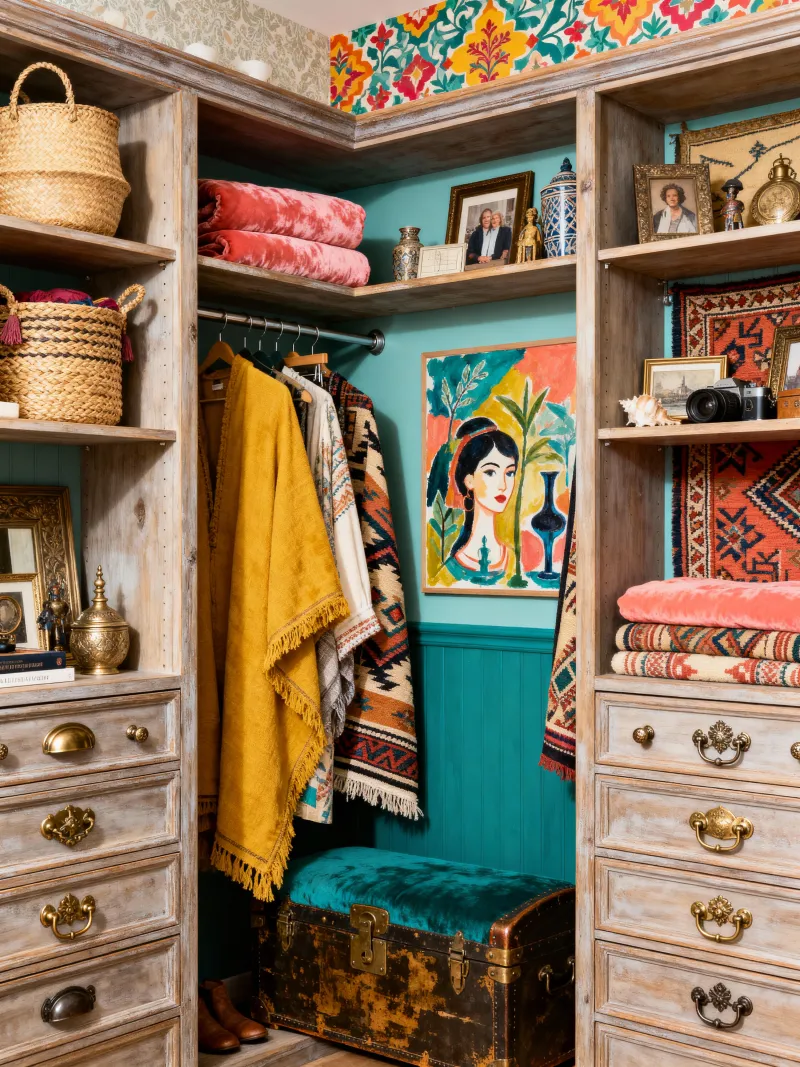
Photo: eclectic vintage closet personal style moodboard warm aesthetic, via r2-us-west.interiorai.com
Open any corner of the internet right now and you'll find the same person. Same clean-girl bun, same oversized blazer, same Aesop-adjacent bathroom shelf, same lo-fi playlist. It's not that any of these things are bad — the blazer looks great, the bathroom smells incredible. It's that they've been assembled from the same mood board, and the mood board belongs to everyone.
In a world where aesthetics are downloadable and every look arrives pre-assembled, taste has quietly become the rarest thing you can own. Not clothes. Not followers. Taste — the specific, unexplainable, deeply personal inventory of things that make you feel like yourself.
Taste Is Not the Same as Trend
Here's the distinction that matters: a trend is what everyone wants right now. Taste is what you want, especially when nobody's watching.
Taste is the fact that you've watched the same 1997 film eleven times and can defend it. It's the way you always reach for the weird vintage ring instead of the delicate gold everyone else wears. It's the song you've played so many times your friends groan, the color you're inexplicably drawn to, the specific kind of diner — not the trendy kind, the right kind — that you'll seek out in any new city.
Trends are decided by consensus. Taste is decided by you and you alone, which is exactly why it can't be faked well and can't be copied at all. Someone can buy your outfit. They cannot buy the twenty years of influences, memories, and odd preferences that made you pick it.
Your Taste Was Built, Not Bought
Think about where your taste actually came from. The music your older cousin played in the car. The mall stores you haunted at fifteen. The one aunt whose house smelled like a specific candle you've chased ever since. The show you watched during the worst summer of your life that's now permanently tangled up with who you are.
That's the thing about taste: it's an autobiography wearing a disguise. Your closet, your playlists, your camera roll — they're all a record of where you've been, what you survived, what you loved when loving things felt safe. When someone copies an aesthetic wholesale, they get the surface and miss the story entirely, which is why copied style always looks slightly haunted. There's no one home behind it.
This is why the most stylish people you know rarely look like they're wearing a trend. They look like they're wearing a point of view. The outfit is specific in a way that resists replication — one strange element, one unexpected pairing, one thing that clearly wasn't chosen by algorithm.
Building a Signature (Without Building a Uniform)
So how do you develop taste instead of renting it? You stop outsourcing the decision.
Start paying attention to what you genuinely gravitate toward — not what you gravitate toward when it's been validated. When you save a photo, ask: do I love this, or do I love that 40,000 people liked it? When you're drawn to something "ugly" — a color combination, a piece of furniture, a genre of music people have declared over — sit with it. Your honest reactions to uncool things are where your actual taste lives.
Then, follow the thread backward. If you love a certain silhouette, figure out what era it's from and watch the films, look at the photos, listen to what was playing. Taste deepens with context. A person who loves one thing deeply will always dress and live more distinctively than a person who loves a hundred things shallowly.
A signature doesn't mean a uniform. It means a through-line — a recognizable current that runs through everything you touch, whether that's a red lip, a masculine watch, a commitment to chaos, or a lifelong loyalty to one shade of green.
Taste Is the New Compatibility Test
Here's a fun modern reality: taste has become how we actually evaluate each other. Nobody falls for a résumé. We fall for the person whose playlist makes us feel seen, whose apartment feels like a specific person lives there, whose recommendation — the movie, the restaurant, the jacket — is always right, for them, in a way that turns out to be right for you too.
There's a reason the first visit to someone's apartment feels like reading their diary. What they've chosen to surround themselves with tells you who they are faster than any conversation. Shared taste is intimacy. Someone who loves the same obscure thing you love instantly feels like family, because taste is just values wearing clothes.
Which means cultivating your taste isn't vanity — it's self-knowledge with a public benefit. The more precisely you know what you love, the more precisely the right people can find you.
The Last Unhackable Thing
AI can generate outfits. Influencers can sell lifestyles. The algorithm can predict what you'll click. But taste — the strange, specific, historically-rooted constellation of things that make you you — is the last thing that can't be automated, mass-produced, or drop-shipped.
So love your weird things loudly. Wear the combination nobody else would. Keep watching the same movie. Your taste is your fingerprint. The tragedy isn't that someone might copy it — it's that you might sand it down to match everyone else's before you ever find out what it was.