Your Apartment Is Snitching on You: What Your Space Says When You're Not Performing
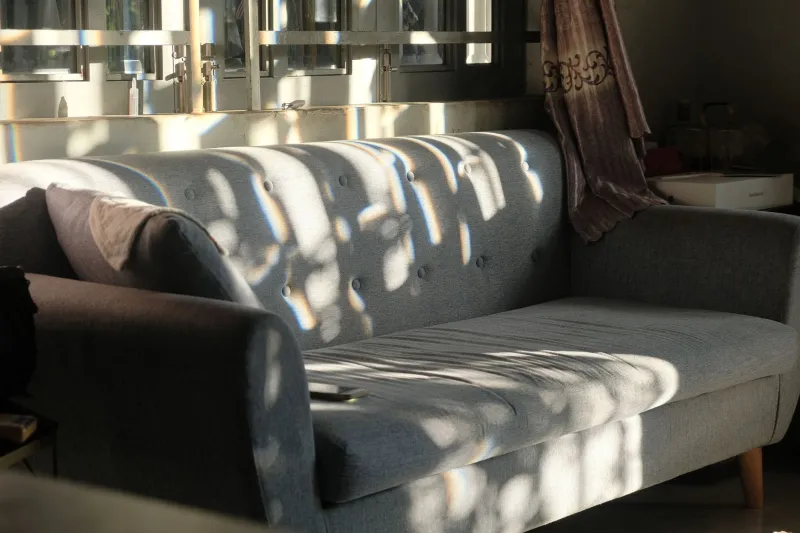
There's a moment I think about a lot: a friend came over last spring, looked around my living room, and said, "Huh. This is so *you."
She'd known me for twelve years. She'd seen every version of me — the job-hopping, the breakups, the phase where I briefly considered becoming a person who runs marathons. And somehow my apartment, with its slightly-too-orange throw pillows and the bookshelf organized by vibes rather than author, summed it all up faster than any conversation we'd ever had.
Your home knows things about you. It knows what you actually value versus what you say you value. It knows whether you're a person who finishes projects or starts them. And unlike your Instagram grid, it can't be edited.
The Guest Room Effect
Most of us live in two homes at once. There's the real one — the laundry chair, the mail pile, the one plant that's thriving while three others gave up. And then there's the version we prepare when someone's coming over: candles lit, dishes hidden in the oven (don't lie, you've done it), throw blankets arranged into what I call "architectural coziness."
That staging ritual isn't dishonest, exactly. It's aspirational. But it's worth noticing who the performance is for. If you've ever spent two hours cleaning for a guest and then felt weirdly deflated after they left — sitting back down in your suddenly too-quiet, too-tidy space — that's a clue. The version of your home that exists for others shouldn't feel like a stranger's place when the door closes.
Instagram Made Us Decorate for an Audience
Somewhere along the way, home design content stopped being about homes. Scroll through any platform and you'll find the same beige-on-beige living rooms, the same faux olive tree, the same "aesthetic" that photographs beautifully and — I'd bet money — feels cold to actually sit in.
There's nothing wrong with loving a trend. But when your decorating decisions start passing through an imagined audience — would this look good in a post? — you've stopped designing a home and started designing a set. And sets are exhausting to maintain. You can't actually live in a showroom.
The quiet luxury crowd figured something out, even if they don't always say it plainly: the expensive part isn't the price tag. It's the confidence to choose things nobody else needs to understand. A $40 lamp you love more than any designer piece is the real flex, because it means you bought it for the person who uses it — you.
The Clutter Corners Are Talking Too
Here's the part nobody puts on a mood board: the stuff you hide says as much as the stuff you style.
That drawer full of takeout menus and dead batteries? The closet where gifts you felt too guilty to return live? The half-finished craft project from the pandemic that you keep moving from apartment to apartment like a hostage? These aren't failures of tidiness. They're data. They show you where your guilt lives, what you're avoiding, which versions of yourself you're still holding onto.
I'm not about to tell you to KonMari your way to enlightenment. But I will say this: when I finally let go of a box of "someday" clothes I'd been carting around for six years, I didn't feel lighter because of the empty hangers. I felt lighter because I stopped paying rent on a fantasy version of myself.
Decorating as Self-Acceptance (No, Really)
We talk a lot on this site about authenticity — what it costs, what it looks like, how to stop performing it. And I've come to believe your living space is one of the most underrated places that work actually shows up.
Think about it. Choosing paint colors, art, furniture — these are decisions with no right answer and no boss. Nobody grades your gallery wall. So the choices you make when nobody's watching reveal something raw: what genuinely pleases you, stripped of everyone else's expectations.
Did you buy that print because you love it, or because it photographs well? Is your kitchen functional for how you actually cook, or for the dinner party host you imagine becoming? Every object in your home is a tiny vote for who you are or who you're pretending to be.
How to Make Your Place Tell the Truth
You don't need a budget or a redesign. Start here:
Walk in like a stranger. Come home one day and look at your space as if you've never seen it. What's the first thing you notice? What are you embarrassed by? What makes you exhale?
Find one thing you love that you'd never post. Maybe it's an ugly-sweet mug from your grandmother. Maybe it's a truly chaotic gallery of ticket stubs. Give it real estate. That's the good stuff.
Undo one staging choice. If there's a room you keep ready for guests but never use — reclaim it. Turn the formal dining room into whatever you actually want. Nobody's coming. Or they are, and they'll get the real you, crumbs included.
Ask the audit question. For anything you're on the fence about: Did I choose this, or did I accept it? Hand-me-downs you resent, gifts you display out of obligation, trends you never liked — those are other people's votes in your home.
The Honest House
My friend's comment — "this is so you" — stuck with me because it came right after I'd stopped decorating for an imaginary audience. I'd hung a weird painting I got at a flea market in Austin. I'd kept the sagging reading chair nobody else understood. And suddenly my apartment finally matched my actual life instead of my aspirational one.
Your home is the longest-running relationship you'll probably ever have. It sees you sick, sad, triumphant, and 2 a.m.-snacking in ways no human ever will. The least you can do is let it be honest.
Decorate like the guest of honor is you. Because on the average Tuesday, it is.